![we buy houses for cash [market_state]](https://image-cdn.carrot.com/eyJidWNrZXQiOiJwcm9kdWN0aW9uLmNhcnJvdC11cGxvYWRzLm9uY2Fycm90LmNvbSIsImtleSI6InVwbG9hZHMvc2l0ZXMvNzcxMjUvMjAyMy8xMi9XZS1CdXktSG91c2VzLUNhc2gtSG9tZS1CdXllcnMtQXJpem9uYS5qcGVnIiwiZWRpdHMiOnsicmVzaXplIjp7IndpZHRoIjoxMTUyfSwidG9Gb3JtYXQiOiJ3ZWJwIiwid2VicCI6eyJxdWFsaXR5Ijo3MH19fQ==)

A family member has died, and the Arizona home left behind may feel like both an inheritance and an immediate responsibility. Then the reverse mortgage lender sends a notice saying the loan is due. That combination can be unsettling, especially when relatives are also trying to understand probate, property condition, title, and the family’s wishes.
The central answer to what happens to an inherited house with a reverse mortgage in Arizona is straightforward, even though the process can be complicated. The loan generally becomes due after the borrower dies, but the heirs usually aren’t personally responsible for a shortfall. The property still secures the debt, so the estate must decide whether to sell the house, repay the loan, or surrender the property through the estate process. Federal protections, including the 95% appraised-value rule, may limit what heirs need to pay. The Consumer Financial Protection Bureau explains how heirs can keep or sell a home after a reverse-mortgage borrower dies.
Table of Contents
- Understanding the Emotional and Legal Weight of Inheritance
- How Reverse Mortgages Work in Arizona Probate
- Options Available to Heirs in Arizona
- Non-Recourse Protections and the 95% Rule
- Timeline and Deadlines for Acting on Inherited Reverse Mortgages
- Common Misconceptions About Inheriting Reverse Mortgage Debt
- Next Steps for Arizona Heirs Navigating Reverse Mortgages
Understanding the Emotional and Legal Weight of Inheritance
A daughter may be grieving her mother while sorting through a home filled with familiar furniture, financial statements, and years of personal belongings. A son may live outside Arizona and suddenly need to coordinate with siblings, a lender, a personal representative, and an attorney. Neither person expected to become responsible for a property decision during a period of loss.
That emotional strain matters because reverse-mortgage notices can sound more threatening than they are. The lender’s demand doesn’t mean the family automatically owes the entire balance from personal funds. It means the loan has reached a maturity event and the estate must address the debt attached to the home.
Why the loan remains after death
A reverse mortgage converts home equity into loan proceeds during the homeowner’s lifetime. Interest and other charges can increase the balance, and the home remains collateral. When the homeowner dies, the debt doesn’t vanish. The estate or heirs must resolve the secured claim if they want to keep or sell the property.
The family should separate personal liability from property liability. Personal liability concerns whether an heir must pay a debt from personal assets. Property liability concerns whether the lender can enforce its lien against the house. A federally insured HECM is generally non-recourse, so heirs aren’t personally liable for a deficiency, but the property still must be dealt with.
A helpful distinction: The family may not owe the lender personally, but the house still carries the obligation.
Arizona’s probate process adds another layer. The home may need to pass through an estate administration process before distribution, and the reverse mortgage lien remains attached while that process is underway. A practical overview of what happens to a house when someone dies in Arizona can help families understand the broader inheritance questions before focusing on the reverse mortgage itself.
How Reverse Mortgages Work in Arizona Probate
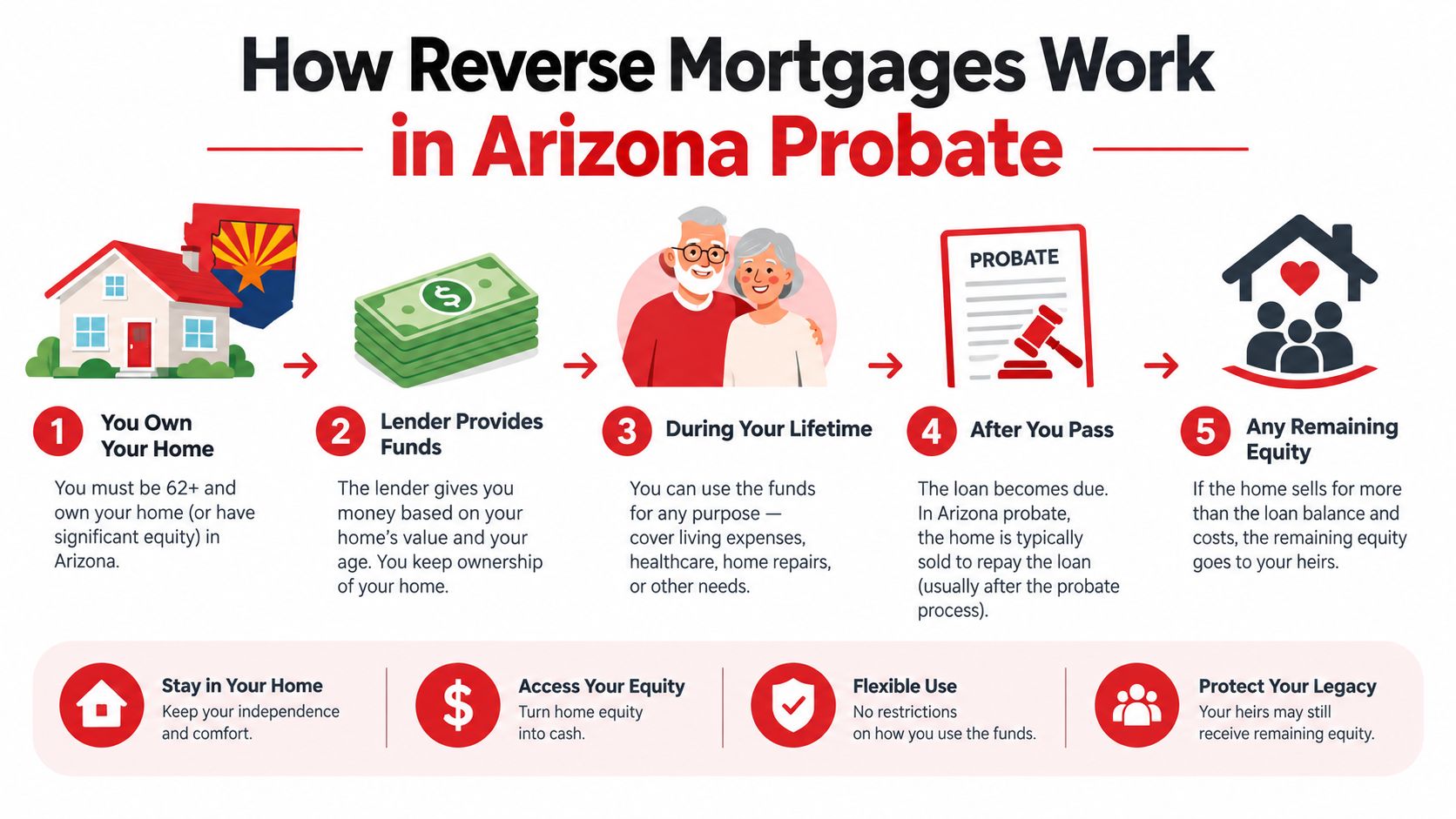
The reverse mortgage usually follows the property into probate rather than disappearing when the borrower dies. If the home is owned in a probate estate, the personal representative generally must identify the loan, notify the servicer, protect the property, and determine how the debt will be resolved. The house can often be sold during probate, but the lien must be paid from the transaction proceeds before the estate receives remaining equity.
The process usually works in this order:
- The borrower dies. The lender receives notice or obtains documentation confirming the death.
- The loan becomes due. The reverse mortgage is treated as a debt secured by the home.
- The estate reviews its choices. The personal representative and heirs decide whether to sell, repay, or surrender the property.
- The lender and estate coordinate. The parties address valuation, payoff instructions, title, probate authority, and any extension request.
- The debt is resolved. A sale, repayment, or approved surrender completes the property’s obligation.
Probate does not erase the lien
Probate determines how the decedent’s assets and obligations are administered. It doesn’t remove a valid secured loan from real estate. The reverse mortgage remains an encumbrance until the lender receives the required payoff or accepts another resolution under the loan and federal rules.
That means an heir usually can’t treat the property as debt-free because a will names that heir as beneficiary. The estate may need to sell the home, use available estate funds, or arrange financing before transferring the property for continued ownership. The remaining equity after payoff belongs to the estate or heirs according to the will or Arizona intestacy rules. A plain-language explanation of how a mortgage can be handled after death provides useful context, although reverse mortgages have their own payoff protections.
A title company, probate attorney, and lender each address different parts of the matter. The attorney handles legal authority and probate questions. The lender provides loan information and payoff requirements. The title and escrow team identifies liens and coordinates the closing.
Options Available to Heirs in Arizona
Arizona heirs generally have three practical paths. The right choice depends on the home’s value, the reverse-mortgage balance, the condition of the property, available estate funds, and whether the family wants to keep the house.
| Option | Key Action | Outcome |
|---|---|---|
| Sell the home | Market the property and resolve the reverse mortgage from the sale proceeds | The loan is paid through closing, and remaining equity goes to the estate |
| Repay or refinance | Pay the required amount with estate or heir funds, or obtain replacement financing | The heir may keep the home if title and financing requirements are satisfied |
| Surrender the property | Work with the lender and estate to transfer or surrender the home instead of keeping it | The lender takes the property process forward, and heirs generally avoid personal liability for a deficiency |
Selling the property
A sale is often the cleanest route when no heir wants the home or the family needs to divide the remaining equity. A traditional listing may produce broad market exposure and could make sense when the property is in good condition, the family has time to prepare it, and the heirs can coordinate repairs, cleaning, showings, and probate approvals.
A direct as-is sale can reduce preparation work. It may be useful when the house is vacant, heavily cluttered, outdated, or difficult for out-of-state heirs to manage. The tradeoff is that the family should compare the proposed proceeds, costs, timing, and certainty with a traditional listing rather than assuming one method is automatically better. Families considering whether renting is practical can also review whether an inherited house should be rented or sold in Arizona.
Repaying the loan or keeping the home
An heir who wants to keep the property may use estate funds, personal funds, or new financing. The key question isn’t whether the loan balance is large. Federal rules may allow satisfaction at the lesser of the outstanding balance or 95% of the appraised value, as explained in HUD’s guidance for people inheriting a HECM property.
Keeping the home can preserve family housing and any equity left after payoff. It also places future responsibility for taxes, insurance, maintenance, and ordinary ownership costs on the heir. A probate attorney and qualified tax professional can help evaluate whether that long-term obligation fits the family’s finances.
Surrendering the property
Surrender may be appropriate when the home has little or no usable equity, the heirs don’t want the property, or the estate can’t manage a sale. The personal representative should coordinate with the lender before abandoning or transferring control. Surrender doesn’t mean the family should ignore notices, because the estate still needs a documented resolution and the property may contain personal belongings or other title issues.
Non-Recourse Protections and the 95% Rule
A reverse mortgage can leave a balance larger than the home’s value, especially after interest and other charges accumulate. For heirs in Arizona, the non-recourse feature of a federally insured HECM generally limits the lender’s recovery to the property and the federal claim process. The estate or heirs typically do not have to use personal funds to cover a shortfall.
The payoff rule works like a ceiling tied to the home’s approved value. An heir who wants to keep the property, or a representative arranging a sale, can generally resolve the loan by paying the lesser of:
- The outstanding reverse-mortgage balance, or
- 95% of the home’s appraised value.
Suppose the loan balance is higher than the appraised value. The family generally does not need to bring the full balance to closing. The value-based amount may limit what is required, subject to the servicer’s procedures, the required appraisal, and applicable federal rules. If the loan balance is lower, that balance generally controls. The federal consumer guidance describes this lesser-of-balance-or-95%-of-value rule.
What the protection does not mean
Non-recourse protection does not erase the lien or make the property debt-free. If the estate does not respond, the lender may still enforce its security interest through the property. Arizona probate authority also matters. The personal representative or another authorized person must be able to communicate with the servicer, protect estate property, and approve the chosen resolution.
The protection does not cover separate obligations, including unpaid taxes, insurance problems, title defects, or other liens. Those issues can delay a sale even when the reverse-mortgage payoff is capped. For a broader explanation of obligations tied to an inherited home, review this guide to inherited-home mortgage obligations.
The appraisal provides the value used for the 95% calculation. An informal estimate from a neighbor or an online calculator cannot replace the valuation required through the lender’s process. The personal representative should request the servicer’s appraisal instructions and confirm which documents establish authority to act.
The 95% rule protects against an underwater loan balance, not against delay or poor planning. The estate still needs to maintain the home, document its authority, communicate with the servicer, and complete the chosen transaction within the available period.
Timeline and Deadlines for Acting on Inherited Reverse Mortgages
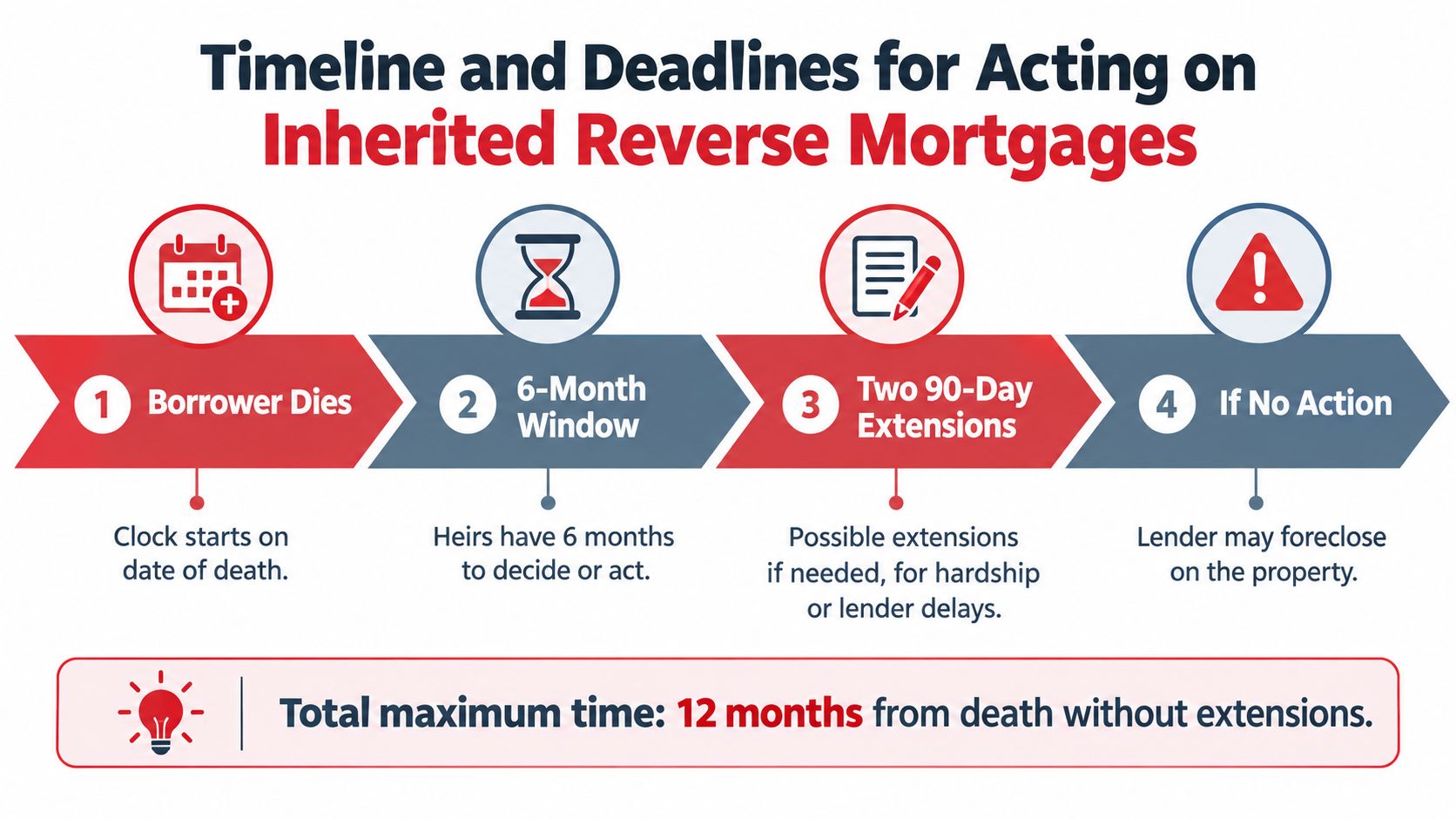
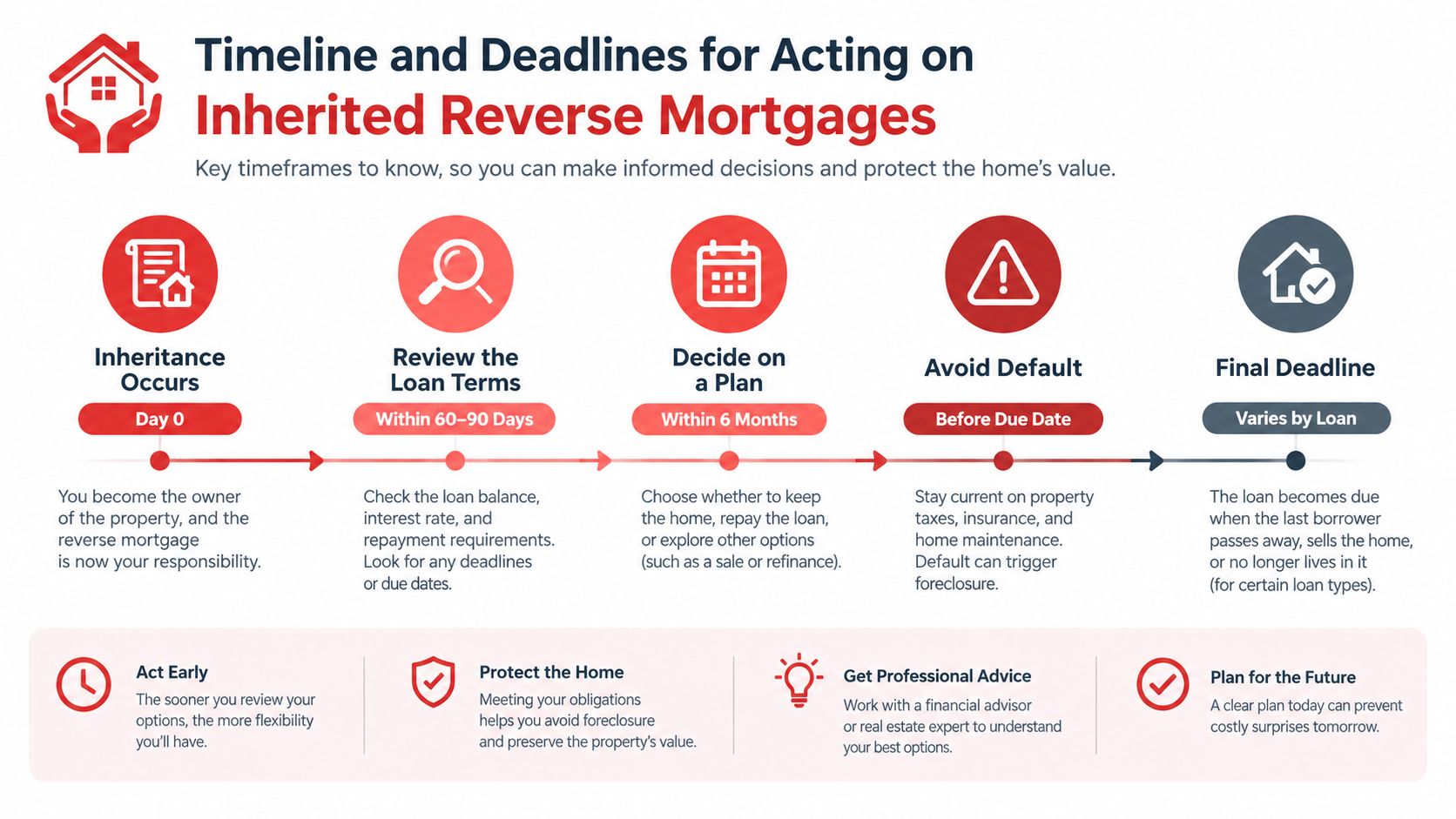
A family may still be gathering probate documents when the reverse-mortgage servicer sends a due-and-payable notice. That notice starts the estate’s response period. It does not wait for probate to finish. The usual period is 6 months to sell or repay the loan. The lender may approve up to two 90-day extensions while the estate actively markets the property, creating a possible window of roughly 12 months before foreclosure activity can begin. The timeline and extension process are described in guidance for selling a home with a reverse mortgage.
A practical sequence
Start with written notice. The personal representative should contact the servicer, provide the death certificate and requested estate documents, and ask for written payoff instructions. The file should identify the current balance, appraisal requirements, and the date used to calculate deadlines. Probate authority functions like a key to the file. Without proof of authority, the servicer may not discuss the loan or approve transaction steps.
Choose a direction early. The estate should decide whether the likely resolution is sale, repayment, or surrender. A sale requires practical preparation: secure the property, arrange access, collect title information, and choose traditional marketing or an as-is sale. The decision can change, but waiting without a working plan consumes the time available under the reverse mortgage.
Document active marketing. An extension request is stronger when the estate can show measurable progress, such as a listing agreement, purchase contract, appraisal activity, or communications with prospective buyers. Extensions support an active resolution. They do not create unlimited time.
Watch foreclosure notices. Silence can allow the lender to move toward foreclosure even while probate remains open. Court filings, creditor notices, and distribution questions can create separate delays. Heirs can compare those court deadlines with the loan deadlines using this Arizona probate timeline guide for heirs.
Practical rule: Save every servicer communication, add the date, and place it in the estate file.
The personal representative should ask a probate attorney how Arizona procedure applies to marketing and selling the home. The answer can depend on the will, probate type, title, disputes, and other creditors. Treat the process like two clocks running together: probate determines who may act, while the reverse mortgage determines when action is due.
Common Misconceptions About Inheriting Reverse Mortgage Debt
Misconception one, heirs must pay the full loan balance. For a federally insured HECM, the home usually remains the source of repayment. Non-recourse protection generally means heirs do not owe a shortfall from their personal funds. To keep the property, the estate may be able to satisfy the debt by paying the lesser of the loan balance or 95% of the home’s appraised value. That rule connects the payoff to the Arizona property, not to the heir’s separate assets.
Misconception two, the lender takes the house immediately. After the borrower dies, the servicer can require the estate to address the loan, but heirs generally have a defined period to sell or repay it. That period is an opportunity to act, not permission to wait. Notices should be answered promptly, and any extension depends on documented efforts and lender approval.
Misconception three, probate erases the reverse mortgage. Arizona probate determines how estate property is administered and who may act for the estate. It does not remove a lien recorded against the home. An authorized sale may occur while probate is open, but the reverse mortgage still must be paid through the sale or another approved resolution.
Misconception four, an heir can keep the borrower’s old arrangement. A reverse mortgage does not operate like a standard loan with ordinary monthly payments. Death activates the loan’s maturity provisions, so the heir needs a written plan with the servicer rather than just continuing the prior arrangement.
Misconception five, an underwater home leaves no choices. The estate may still sell, use the value-based payoff process, or surrender the property. The appropriate choice depends on the appraisal, loan terms, title, probate authority, and family goals. Unusual ownership or probate issues deserve review by an Arizona legal professional before anyone signs documents.
Next Steps for Arizona Heirs Navigating Reverse Mortgages
The assumption that an heir must choose between paying an enormous balance and losing everything is often wrong. The more accurate picture is narrower: the property secures the loan, the estate must act, and federal HECM rules generally protect heirs from personal responsibility for a deficiency.
Build the estate file
The personal representative should gather the death certificate, reverse-mortgage statements, the will or trust documents, probate filings, property insurance information, tax records, title documents, and any lender notices. The family should also record the home’s condition and secure vacant buildings against damage. These materials help the attorney, servicer, title company, and potential buyer work from the same information.
Get professional guidance
A probate attorney can explain who has authority to sell, whether court approval is needed, and how the reverse mortgage fits with other estate obligations. A tax professional can address estate and sale consequences that depend on the family’s facts. Families who need administrative help organizing documents or coordinating legal tasks can research virtual legal assistants companies as a support resource, but administrative assistance isn’t a replacement for advice from a licensed Arizona attorney.
Compare sale methods
A traditional listing may suit a property that is market-ready and likely to attract strong buyer interest. Repairing first may help when the estate has funds, decision-makers, and enough time to manage contractors. An as-is direct sale may fit a vacant or damaged property when the heirs value a simpler process and a closing timeline coordinated with the lender and escrow.
Red Rock Properties purchases residential properties directly throughout Arizona and can discuss an as-is sale, flexible closing timing, and coordination with title and escrow when that approach fits the estate. Heirs should compare any offer with a traditional listing and review the net proceeds before deciding.
The family should contact the reverse-mortgage servicer promptly, ask for written payoff instructions, and tell the servicer which resolution is under consideration. A documented plan gives the estate a better chance to protect the property, preserve remaining equity, and avoid decisions made under unnecessary confusion.
Red Rock Properties can review an inherited Arizona home with a reverse mortgage, including properties that need repairs or have probate and title complications. Visit Red Rock Properties to discuss a direct sale, compare it with traditional listing options, and explore a closing timeline that fits the estate’s needs.