![we buy houses for cash [market_state]](https://image-cdn.carrot.com/eyJidWNrZXQiOiJwcm9kdWN0aW9uLmNhcnJvdC11cGxvYWRzLm9uY2Fycm90LmNvbSIsImtleSI6InVwbG9hZHMvc2l0ZXMvNzcxMjUvMjAyMy8xMi9XZS1CdXktSG91c2VzLUNhc2gtSG9tZS1CdXllcnMtQXJpem9uYS5qcGVnIiwiZWRpdHMiOnsicmVzaXplIjp7IndpZHRoIjoxMTUyfSwidG9Gb3JtYXQiOiJ3ZWJwIiwid2VicCI6eyJxdWFsaXR5Ijo3MH19fQ==)

A family member has died, and now an inherited Arizona house is creating more questions than answers. The property may have a mortgage, unpaid taxes, an HOA balance, or a judgment attached to it. The title paperwork can feel especially intimidating when several heirs live in different places or disagree about what should happen next.
Selling an inherited house with liens in Arizona is usually possible, but the order of the steps matters. An heir generally doesn’t become personally responsible for every debt just because the house was inherited. However, a lien can remain attached to the property, affect the transfer of title, and reduce the money available to the estate. The practical path usually involves identifying each lien, determining who has authority to sell, and arranging payment through escrow.
Table of Contents
- Navigating the Shock of Inherited Property Liens
- Identifying Common Arizona Liens and Their Timelines
- Choosing the Right Legal Pathway to Transfer Title
- Evaluating Your Options for Selling the Inherited Home
- How the Closing and Lien Payoff Process Actually Works
- Answers to Common Questions About Inherited Liens
Navigating the Shock of Inherited Property Liens
A personal representative may discover the problem while gathering estate documents. The house looks like a valuable inheritance, but a title search shows a mortgage, delinquent property taxes, and a recorded judgment. That discovery can make the family wonder whether the property is trapped, whether an heir must pay the debts personally, or whether a sale is even possible.
A lien is a legal claim connected to the property. It gives a creditor or governmental body a way to seek payment from the property’s value. The lien doesn’t automatically mean the heir owes the debt from personal funds, and it doesn’t make the house unsellable. It does mean the title company must account for the claim before a buyer receives clean title.
An Arizona probate-law explanation states that estate debts are generally addressed before distribution. If the estate lacks enough money to satisfy a lien, the house can still pass to an heir, but the lien remains attached to the property. The heir then takes the property subject to that debt and must resolve it before selling or refinancing cleanly. More detail about this distinction appears in Arizona guidance on liens attached to inherited property.
The first calm steps
The family doesn’t need to decide immediately whether to list, repair, rent, or sell directly. The first priority is a reliable picture of the property and its obligations.
- Secure the house: Change access arrangements if necessary, protect valuables, maintain basic utilities, and check for active leaks or damage.
- Gather estate records: Locate the death certificate, deed, mortgage statements, tax notices, HOA correspondence, and probate documents.
- Confirm the current owner: Review how the property was titled and whether a personal representative, trustee, surviving joint owner, or beneficiary has authority to act.
- Order title work: A preliminary title report can identify recorded mortgages, judgments, tax liens, child-support liens, HOA claims, and other encumbrances.
- Avoid guesses about balances: A statement found in the decedent’s files may be outdated. Official payoff figures will be needed later.
Practical rule: A lien is a property problem first, not automatically a personal debt problem for every heir.
Title research can also uncover defects unrelated to the debt itself, such as missing releases or ownership inconsistencies. Families dealing with those complications may benefit from learning how professionals fix costly title defects before committing to a sale.
An heir who lives outside Arizona can give the personal representative or a local professional written permission to gather information, but the exact authority depends on the estate documents and Arizona procedure. Legal advice is appropriate when the deed, will, trust, or family relationships are unclear.
The immediate goal isn’t to rush into a contract. It’s to establish three facts: what is owed, who can sign, and whether the property has enough value to justify the intended plan.
Identifying Common Arizona Liens and Their Timelines
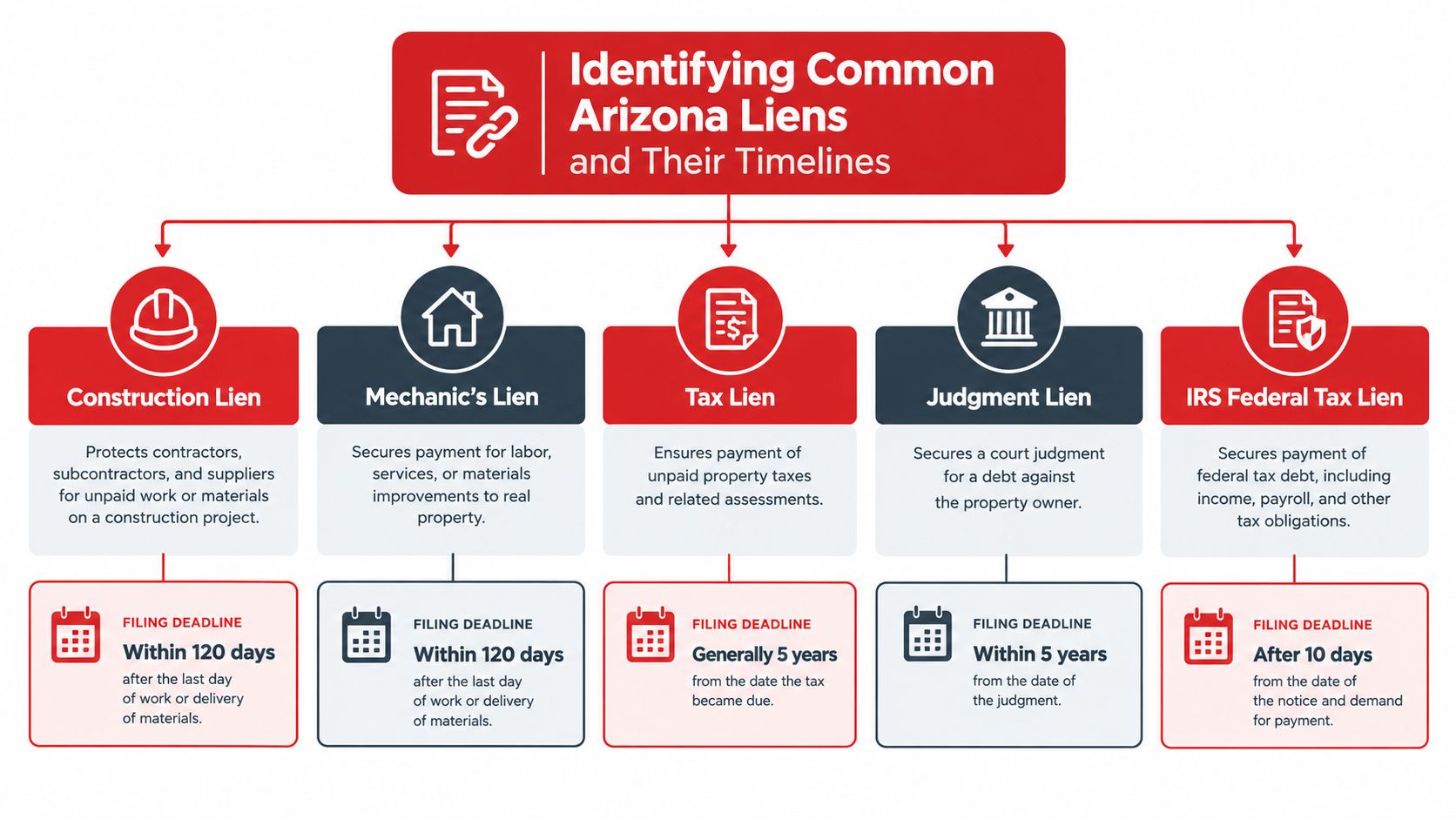
The lien type determines both urgency and payoff strategy. A mortgage usually has a familiar lender and a payoff process. A property-tax lien can have superior priority and foreclosure implications. An HOA or judgment lien may require a separate verification of the amount, status, and release procedure.
Mortgage and secured loans
A mortgage, deed of trust, or home-equity obligation is secured by the house. The lender’s claim normally gets paid from sale proceeds before the heirs receive the remaining equity. The estate or heir shouldn’t rely on a monthly statement because the closing requires an official payoff figure that accounts for the lender’s requirements through the anticipated closing date.
A reverse mortgage or home-equity line of credit can require separate attention because the balance and payoff terms may differ from a standard mortgage. The estate representative should ask the lender what happens after the borrower’s death and whether payments must continue while the property is being prepared for sale.
HOA and judgment liens
Unpaid HOA assessments can become a recorded claim against the property. The title company may need an association demand statement, including current assessments, collection charges, and any other amounts required for release.
A judgment lien can arise after a creditor obtains a court judgment and records it against property. The amount may have changed since the original judgment, so the estate should request written confirmation rather than estimating the balance.
Child-support liens
Arizona child-support liens follow a defined priority rule. The recorded amount includes the amount owed when the lien is recorded and later-accrued amounts. It generally has priority over other liens except certain previously recorded mortgages, deeds of trust, contracts, conveyances, or security agreements created by the property owner. The Arizona child-support lien statute explains the relevant priority structure.
That distinction matters at closing. The title and escrow teams need to identify the lien, verify the amount, and determine how payment and release documents will be handled before the buyer receives clear title.
Property-tax liens and redemption risk
Arizona property-tax liens are especially powerful. Under Arizona law, they attach on January 1 of the tax year and are prior and superior to all other liens and encumbrances, subject to narrow statutory exceptions. The lien remains until the taxes, penalties, charges, and interest are paid, title vests in a tax-sale purchaser, or an appropriate certificate of removal and abatement is issued. The Arizona property-tax lien statute provides those rules.
A tax-lien certificate creates a different level of urgency. Arizona law allows tax-lien purchasers to begin foreclosing redemption rights three years after the sale and no later than ten years after acquisition. The Arizona statute governing foreclosure of redemption rights also matters because a 2025 Arizona bill notes that certain state tax-lien sales can extinguish other state-held liens and encumbrances.
An inherited house with delinquent taxes therefore needs more than a routine mortgage payoff. The estate should determine whether the problem involves ordinary unpaid taxes, a tax certificate, or an active foreclosure timeline. Families can also review this Arizona guide to selling a house with liens for additional context.
Choosing the Right Legal Pathway to Transfer Title
A buyer can’t receive a valid deed from someone who lacks authority to sell. Before an heir signs a listing agreement or purchase contract, the estate should establish how title will move from the deceased owner to the person or entity selling the property.
Arizona offers more than one pathway. The correct route depends on the property’s title, the estate’s assets and debts, the waiting period, the heirs involved, and whether the property’s value qualifies for a small-estate affidavit.
The small-estate affidavit math
Arizona’s small-estate process can be unusually useful for inherited homes because the property limit is measured net of liens and encumbrances, rather than by gross value. The statutory cap described in Arizona’s affidavit materials is $300,000 or less after subtracting liens, subject to the applicable requirements and waiting period. The Arizona small-estate affidavit packet requires the filer to subtract mortgages, judgment liens, delinquent property taxes, and similar secured debts as of the date of death.
That creates a counterintuitive result. A home with a fair cash value of $450,000 and a $200,000 mortgage may have net real-property value within the affidavit limit, assuming the other legal requirements are satisfied. The estate shouldn’t assume that the gross home value automatically disqualifies the shortcut.
The calculation must use the relevant lien balance as of the date of death. A payoff quote that includes post-death interest, fees, or penalties can overstate the encumbrance for the eligibility calculation. The Arizona forms and guidance treat the unpaid principal balance of lien-secured obligations as part of the net-value test, so the personal representative should separate the death-date balance from later sale-related charges.
A practical affidavit sequence
The family should avoid treating the affidavit as an informal shortcut with no paperwork. A typical workflow is:
- Calculate net equity: Start with fair cash value and subtract qualifying secured debts and encumbrances as of the date of death.
- Check eligibility: Confirm the statutory cap, waiting period, notice obligations, and any other requirements with an Arizona probate attorney or court resource.
- Prepare the packet: Gather the death certificate, affidavit, supporting documents, and evidence of the lien amounts.
- Record the required documents: Record the death certificate and court affidavit as required before title and escrow coordinate the closing.
- Confirm title acceptance: Have the title company review the recorded documents and approve the proposed transfer path.
The six-month waiting period is a central part of the small-estate route when real property is involved. A family that needs to sell sooner may need a different legal strategy, and a family that skips the waiting-period analysis may sign documents that cannot be used to convey marketable title.
Informal probate and sale authority
When the affidavit doesn’t fit, probate may still provide a workable selling route. In many informal probate cases, Arizona law gives the personal representative authority to sell, mortgage, or lease estate property without returning to court for separate sale approval. Arizona Revised Statutes section 14-3715 authorizes a personal representative to sell estate property for cash or credit, with or without security for unpaid balances.
This authority doesn’t erase liens or eliminate fiduciary duties. The representative still needs to identify creditors, protect the estate, act properly for the beneficiaries, and direct lien payments through closing.
For a deeper explanation of title transfers, families can review the Arizona probate guide to deeds for inherited property. A probate attorney can then help determine whether the estate needs an affidavit, informal probate, formal probate, trust administration, or another transfer method.
Evaluating Your Options for Selling the Inherited Home
Once the legal authority is clear, the family can compare sale strategies. No single route works for every inherited property. The right choice depends on the home’s condition, the lien deadlines, the amount of equity, the heirs’ ability to coordinate, and how much uncertainty the estate can tolerate.
Traditional listing
A traditional listing may expose a maintained home to the broadest group of buyers. It can make sense when the property is in marketable condition, the heirs can wait for showings and inspections, and the title work is unlikely to delay closing.
The disadvantages are practical. The estate may need to pay utilities, insurance, landscaping, cleaning, repairs, and other carrying expenses while the home is listed. A buyer’s financing can also fail if the appraisal, inspection, property condition, or title timeline creates a problem. Those risks matter more when a tax-lien redemption deadline or foreclosure concern is approaching.
Repairing before listing
Repairs can improve the home’s presentation and may expand the number of buyers willing to consider it. Cleaning, removing personal belongings, correcting safety problems, and addressing visible maintenance issues may help a property compete with other listings.
Repair work also consumes estate funds and management time. Contractors need access, heirs must approve spending, and the estate may not recover every dollar invested. The family should compare a realistic projected sale price with repair costs, holding costs, commissions, closing expenses, and lien payoffs before authorizing major work.
Direct as-is sale
A direct as-is sale can suit an estate that values a simpler process, has limited funds for repairs, or faces complicated title and lien coordination. A reputable local buyer may evaluate the property in its current condition, purchase subject to the existing title issues, and work with the title and escrow company to pay valid liens from closing proceeds.
The trade-off is that an as-is offer may be lower than the highest possible retail price. The estate should ask how the offer was calculated, which costs the buyer will cover, whether any assignment or inspection conditions apply, and how the lien payoff will be coordinated.
This guide to what a cash home buyer pays for a house in Arizona can help heirs understand the questions that belong in an offer comparison.
| Selling Method | Timeline to Close | Repairs & Cleaning | Lien Payoff Handling |
|---|---|---|---|
| Traditional listing | Depends on buyer demand, inspections, financing, title, and probate authority | Usually requires preparation and may involve repairs | Title and escrow request payoffs and pay liens at closing |
| Repair and list | Adds preparation time before marketing | Estate funds and coordinates the work | Payoffs remain part of the closing and settlement plan |
| Direct as-is sale | May offer a more controllable closing schedule, subject to title review | Buyer evaluates the existing condition | Title and escrow coordinate lien payoffs from sale proceeds |
Multiple heirs should agree in writing about the preferred path before accepting an offer. A personal representative also needs to document major decisions and keep the estate’s legal obligations separate from personal preferences.
How the Closing and Lien Payoff Process Actually Works
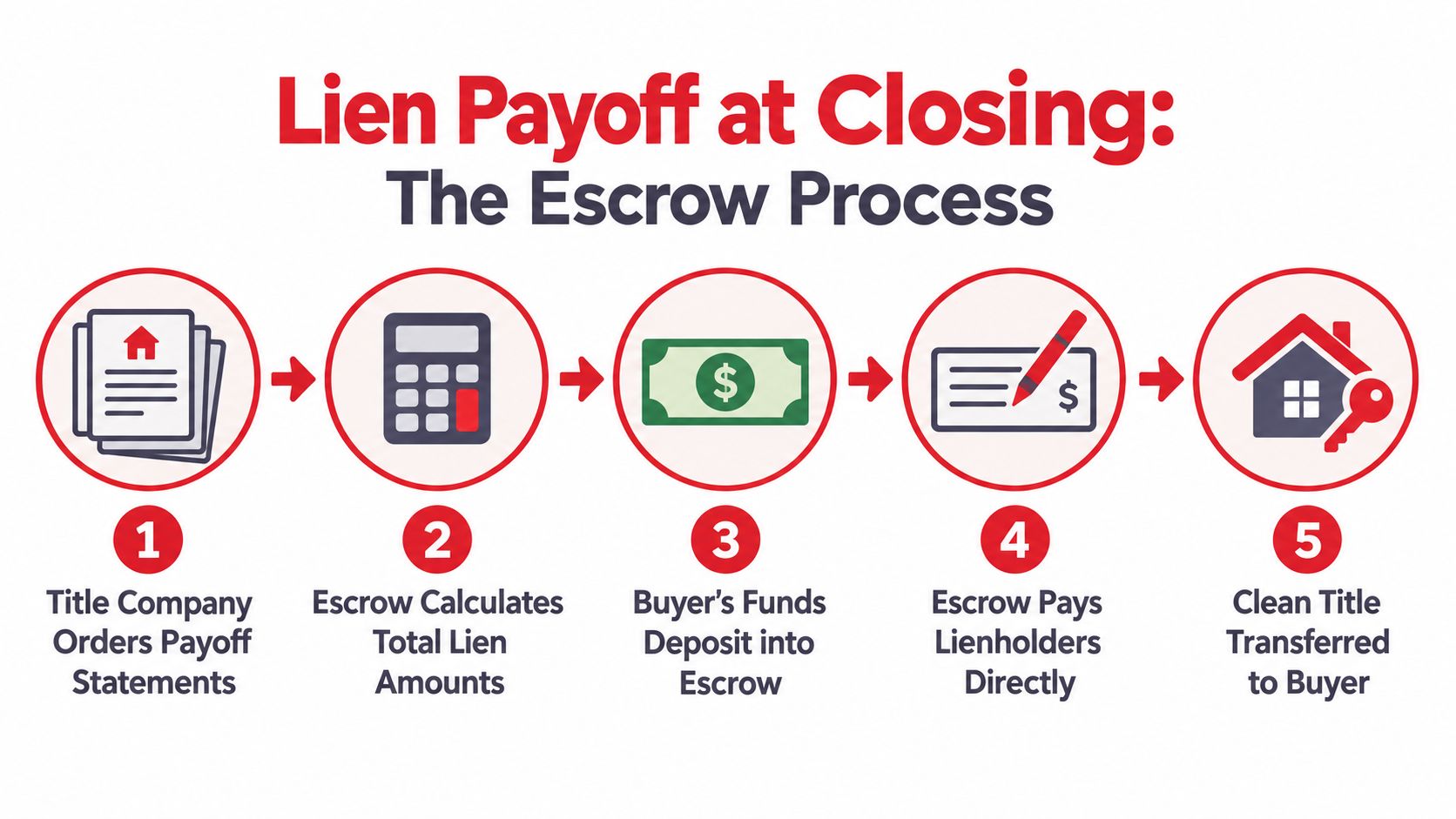
Many heirs assume a lien must be paid before the house can be sold. In practice, the sale proceeds often provide the money used to satisfy the lien. The title company and escrow agent coordinate the process so creditors receive payment and the buyer receives the title protection required for closing.
The process still requires accurate information. A rough mortgage balance, an old tax statement, or an unverified HOA demand can create a shortage that delays settlement.
The technical sequence
- The title company searches the public record. The search identifies recorded liens, their apparent priority, the owner of each claim, and any releases that may be missing.
- The estate classifies each lien. The representative separates mortgages, judgment liens, HOA claims, child-support liens, property-tax liens, tax certificates, and disputed items.
- Payoff statements are ordered. Each creditor provides an official amount valid through the expected closing date, along with instructions for obtaining a release.
- Escrow calculates the settlement. The closing statement shows the sale price, approved costs, payoff amounts, taxes, credits, and the estimated amount remaining for the estate.
- The buyer deposits funds. The purchase money goes into escrow rather than directly to the heirs.
- Escrow pays lienholders first. Payment follows the title company’s instructions and applicable priority rules.
- Release documents are recorded. The title company coordinates recording of releases or other documents needed to deliver insurable title.
- The remaining proceeds are distributed. After approved deductions and lien payments, the net funds go to the estate or authorized beneficiaries according to the governing documents and probate process.
Why payoff figures matter
The death-date balance used for an affidavit calculation isn’t necessarily the same as the amount required to close. Interest, late charges, recording fees, and post-death expenses may affect the closing payoff. The representative should keep those figures separate and give the title company the creditor’s official instructions.
Liens almost always need to be addressed before a buyer can receive clean, insurable title. A practical sequence includes a county or title search, priority review, payoff requests, confirmation of special tax or HOA treatment, and escrow disbursement so release documents can be recorded after closing.
Arizona tax liens deserve particular attention because delay can create redemption or foreclosure risk. Families handling unpaid taxes can review this Arizona resource about selling a house with unpaid property taxes while obtaining advice specific to the property.
Closing perspective: The heirs don’t need to guess where the money goes. The settlement statement should show the sale price, every approved deduction, each lien payoff, and the net amount remaining for the estate.
If the sale price won’t cover all valid liens and closing costs, the estate may need creditor negotiations, a short sale discussion, additional estate funds, or legal guidance before signing a contract. A title and escrow professional can identify the shortfall, but a probate attorney and tax professional may be needed to decide how the estate should respond.
Answers to Common Questions About Inherited Liens
Does an heir personally owe the mortgage or lien?
Not automatically. The estate generally handles the decedent’s obligations, while a lien remains connected to the property. If an heir keeps the house, the heir may need to continue, refinance, or otherwise resolve the secured debt to retain the property. A co-signer, guarantor, community-property issue, or separate agreement can change the analysis, so legal advice matters.
Can the house be sold if the mortgage is still active?
Usually, yes. The mortgage payoff can often be taken from the sale proceeds through escrow. The lender must receive the correct payoff amount, and the title company must confirm that the lien will be released or otherwise properly handled. Families can review whether an inherited house’s mortgage must be paid off before choosing to sell or keep the property.
What if the liens exceed the home’s value?
The home may be underwater. The estate shouldn’t assume an heir must personally cover the difference, but a normal closing can’t distribute money that doesn’t exist. The representative may need to discuss a negotiated payoff, creditor approval, a sale structured around the actual value, or another legal option.
Does selling affect an heir’s credit?
A deceased relative’s mortgage or lien generally doesn’t become an heir’s personal credit account merely because the heir inherited the property. Credit consequences can arise if the heir co-signed, assumed an obligation, opened an account, or fails to pay a debt for which the heir is legally responsible. A probate or consumer-law attorney can review the specific documents.
What happens when heirs disagree?
The personal representative follows the will, Arizona law, and fiduciary duties rather than choosing the preference of one beneficiary. The family should request a clear accounting, discuss the property’s value and liens, and obtain legal guidance before one heir signs a deed or contract without the required authority.
Is there a tax issue when the house is sold?
A sale can create tax questions involving the property’s basis, date-of-death value, estate expenses, debt, and the final sale price. The commonly discussed step-up-in-basis concept may affect capital-gain calculations, but the result depends on the estate and the taxpayer’s circumstances. A qualified tax professional should calculate the result rather than relying on a general rule.
What should happen first?
The safest sequence is to secure the property, obtain title work, identify each lien, calculate the relevant death-date net value, confirm the transfer pathway, and then compare selling options. The estate should avoid signing documents that assume clear title before the authority and payoff process are understood.
Red Rock Properties evaluates inherited and probate homes throughout Arizona, including properties with liens, title complications, deferred maintenance, or difficult timelines, and coordinates with title and escrow when a direct as-is sale fits the estate’s needs. Families can review the available options and request information by visiting Red Rock Properties.