![we buy houses for cash [market_state]](https://image-cdn.carrot.com/eyJidWNrZXQiOiJwcm9kdWN0aW9uLmNhcnJvdC11cGxvYWRzLm9uY2Fycm90LmNvbSIsImtleSI6InVwbG9hZHMvc2l0ZXMvNzcxMjUvMjAyMy8xMi9XZS1CdXktSG91c2VzLUNhc2gtSG9tZS1CdXllcnMtQXJpem9uYS5qcGVnIiwiZWRpdHMiOnsicmVzaXplIjp7IndpZHRoIjoxMTUyfSwidG9Gb3JtYXQiOiJ3ZWJwIiwid2VicCI6eyJxdWFsaXR5Ijo3MH19fQ==)

A letter from an Arizona homeowners association can feel like one more problem in an already painful period. The house may be vacant, probate may still be open, and family members may be unsure whether the unpaid balance belongs to the estate, the heirs, or the property itself.
For many families, selling an inherited house with HOA debt in Arizona becomes a timing and paperwork challenge rather than a simple real estate transaction. Assessments may continue after death, while title companies, the personal representative, the mortgage lender, the tax authority, and the HOA all need accurate information before closing.
The good news is that heirs don’t have to solve everything at once. The practical questions are clear: How does the HOA debt attach to the home? Who handles charges that accrue during probate? Does the property face foreclosure pressure? Can the house be listed traditionally, sold as-is, or transferred before probate closes?
This guide from Red Rock Properties explains those issues in plain English. It isn’t legal or tax advice, and families should consult a qualified Arizona probate attorney and tax professional when the estate, ownership, or debt situation is complicated. For a broader overview of the overall inheritance process, heirs can also review this step-by-step guide to selling an inherited house in Arizona.
Table of Contents
- Introduction for Heirs Facing HOA Debt After Inheritance
- How HOA Debt Attaches to an Inherited Arizona Home
- Arizona HOA Lien Priority and Foreclosure Thresholds You Should Know
- Your Options for Selling an Inherited House With HOA Debt
- How to Clear HOA Debt and Close the Sale in Arizona
- Frequently Asked Questions and Next Steps for Arizona Heirs
Introduction for Heirs Facing HOA Debt After Inheritance
Consider an heir whose parent owned a condominium in Arizona. After the death, the family stops receiving regular household mail, assumes the home is waiting for probate, and leaves the property vacant. Then the HOA sends a delinquency notice, followed by a statement showing assessments and additional collection charges.
The family may reasonably think, “The owner died, so the account should have stopped.” Arizona property-based HOA obligations don’t work that way. The association’s claim can remain connected to the home, and the balance can continue changing while the estate is being administered.
That doesn’t automatically mean an heir has personally taken on the deceased owner’s debt. It does mean the property may not transfer or sell cleanly until the association’s claim is addressed. A house can have meaningful equity and still create a closing problem if the payoff isn’t verified early.
Practical rule: Death may change who has authority to act, but it doesn’t make a property-based claim disappear.
Why probate can make the problem harder
Probate often involves court filings, creditor notices, family decisions, title questions, and property maintenance. If nobody contacts the HOA, the association may continue sending statements to the deceased owner or to the property address. Meanwhile, ongoing assessments, late fees, collection costs, and attorney fees may increase the amount that must be resolved before a sale closes.
Families also face a practical decision. They may want to preserve the home, but keeping it vacant creates ongoing expenses for insurance, utilities, maintenance, mortgage payments, taxes, and HOA charges. Selling may be the cleanest financial choice, but the sale still requires proper probate authority and title coordination.
The first goal is clarity, not speed
The safest early move is to identify the legal decision-maker, request the HOA’s current ledger, and ask a title company to review the property. Those documents show whether the balance is only current assessments or includes collection activity and other charges.
A traditional listing, a repair-first sale, and a direct as-is sale can all be reasonable choices. The right path depends on the home’s condition, the amount of equity, the estate’s authority, the family’s timing, and whether the expected sale proceeds can cover the verified claims.
How HOA Debt Attaches to an Inherited Arizona Home
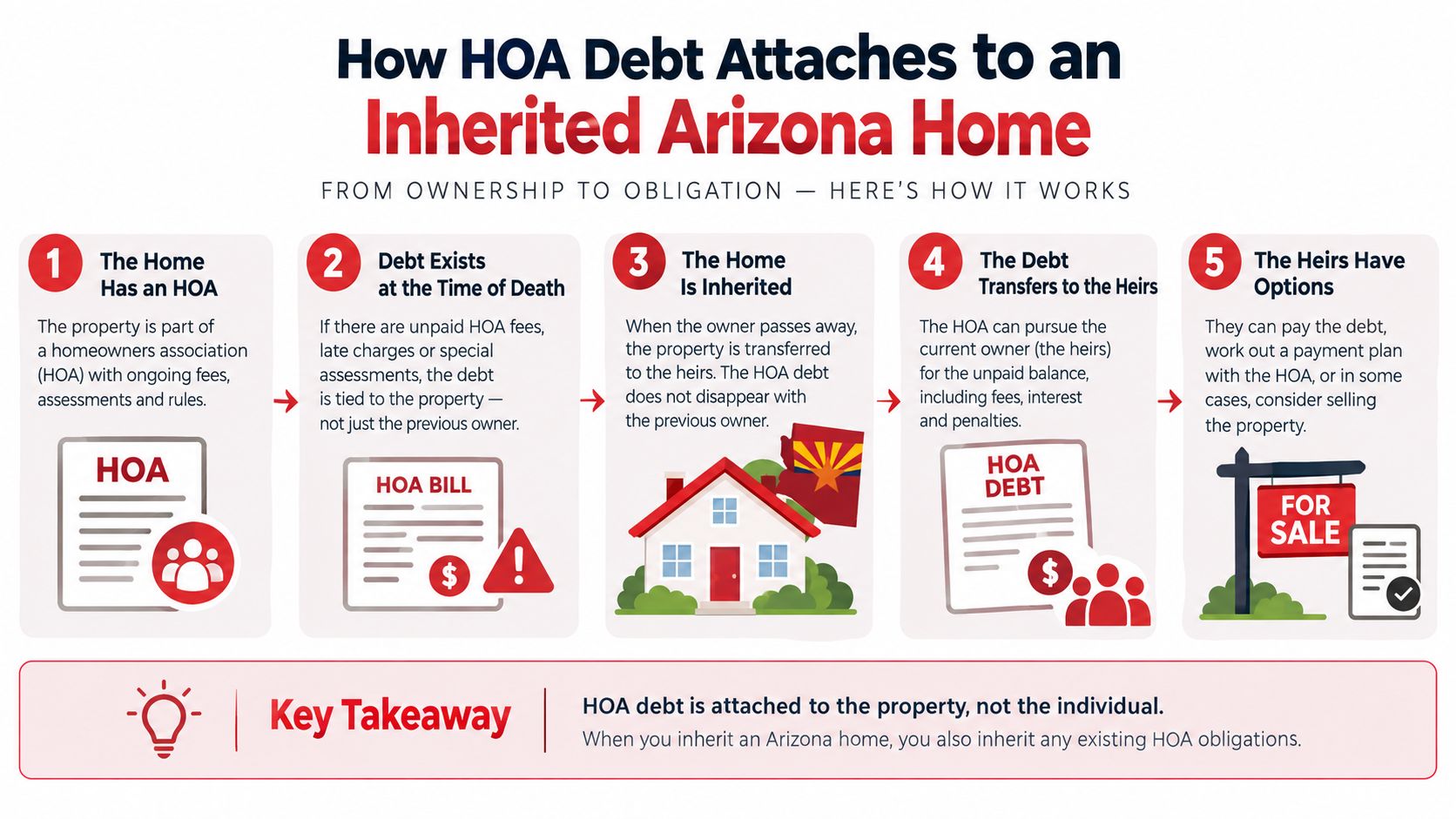
A house can pass to an heir while its HOA account continues running. In Arizona, assessment liens generally attach automatically when an assessment becomes due under Arizona Revised Statutes §§ 33-1256 and 33-1807. The claim is tied to the property, not only to the deceased owner, so inheritance does not erase the account.
The balance can grow during probate. Regular assessments may continue while the estate owns or controls the home, and late fees, collection costs, and attorney fees may be added if the account remains delinquent. Probate may delay decisions, but it does not pause the HOA ledger.
Property liability versus personal liability
These concepts answer different questions:
- Personal liability: Whether an heir must pay the deceased person’s debt from personal funds depends on the estate, ownership, and other legal circumstances. Receiving the home does not automatically mean the heir personally owes every charge.
- Property liability: The HOA claim stays connected to the home. A sale generally must address the lien before the buyer can receive insurable title.
- Ongoing charges: Assessments can keep accruing while the estate handles probate. The current owner or authorized estate representative must determine how those charges will be paid and resolved.
Consider a vacant condominium. An heir may never have signed the original HOA documents, yet the estate or current titleholder still has to address assessments connected to the property. Waiting without requesting updated records is like leaving a meter running. The payoff at closing may exceed an earlier letter because new assessments and collection charges have accumulated.
The timing also affects strategy. If the home has enough equity, the sale may provide funds to pay the verified HOA balance through escrow. If equity is limited, the family needs the current payoff early so it can evaluate whether repairs, a traditional listing, or an as-is sale makes financial sense. A guide to selling a house with an HOA lien in Arizona can provide general background, but the estate should rely on current account records and Arizona-specific legal advice.
Readers seeking general education about probate and association charges can also find probate help for HOAs. Arizona counsel remains the appropriate source for an Arizona estate.
Why the title company asks for a payoff
A title company reviews public records and claims that could affect the transfer. The HOA’s current ledger or payoff statement shows whether the balance includes only assessments or also late fees, collection costs, attorney fees, and release requirements. The title company may also verify who has authority to sign, particularly when a personal representative is selling for the estate.
An old letter or informal phone estimate is not enough. A current payoff should identify the amount due, itemized charges, payment instructions, and the period for which the figure is valid. The preliminary title report then shows whether the HOA lien is the only claim affecting the sale or one of several claims competing for the proceeds.
Arizona HOA Lien Priority and Foreclosure Thresholds You Should Know
An inherited home can remain behind on HOA dues while probate is still open. The monthly bill does not pause because the owner died or the court appointed a personal representative. The estate usually must account for those charges, while the personal representative decides how they will be paid and records them in the sale calculation.
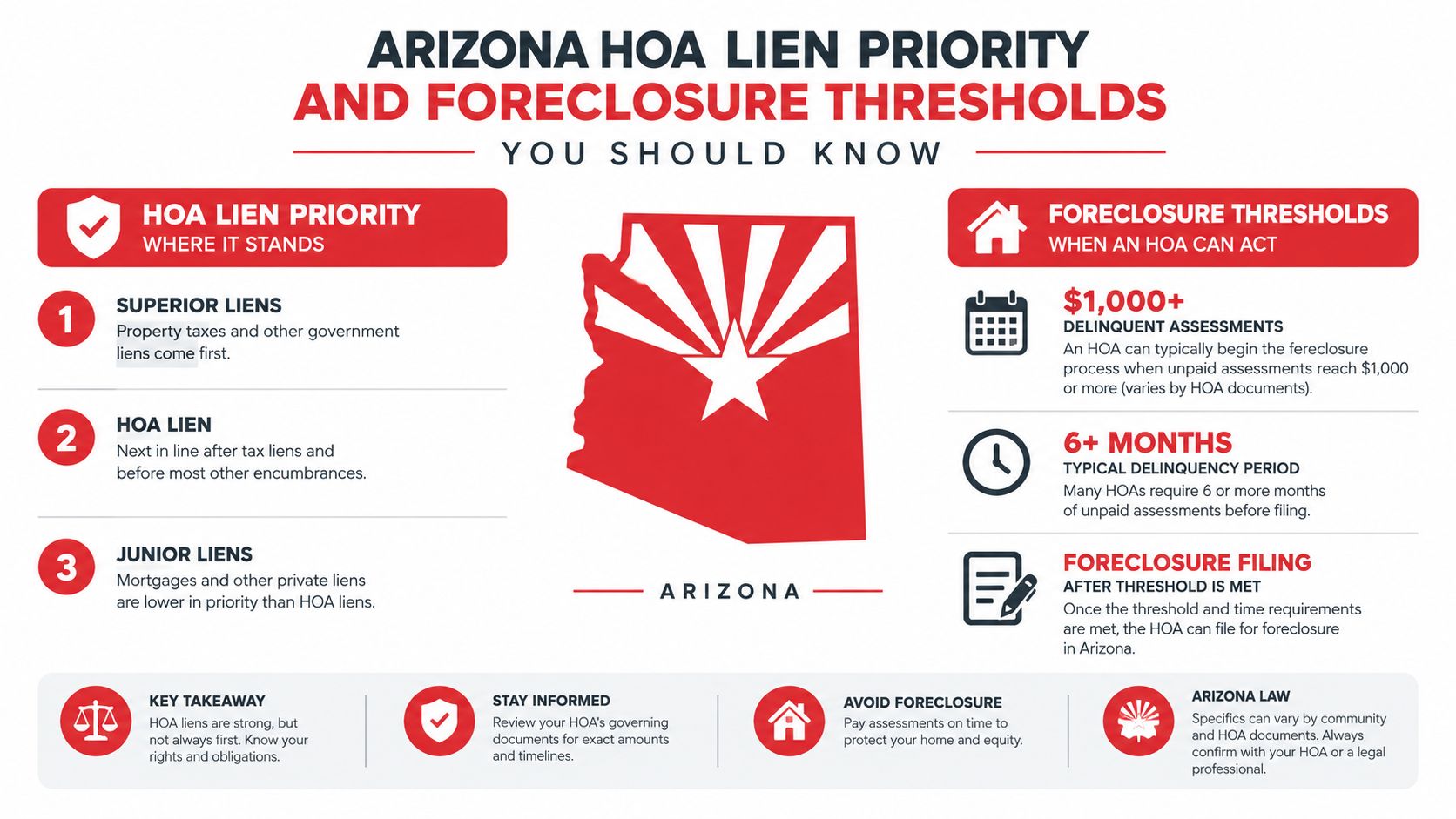
Arizona HOA lien priority affects both the payoff amount and the time available to sell. An assessment lien generally takes priority over many later liens, but it usually remains behind a recorded first mortgage or deed of trust, tax liens, and encumbrances recorded before the community declaration. In practical terms, the home is like a line of claims waiting for the sale proceeds. Senior claims are paid first, and the HOA receives funds according to its legal position.
The association cannot take the property through an informal process. Foreclosure of an Arizona HOA lien generally requires a court action, as explained in this Arizona HOA foreclosure law summary.
Condo and planned community rules differ
Arizona’s foreclosure thresholds vary by property type:
| Property type | General foreclosure threshold |
|---|---|
| Condominium | One year of delinquency or at least $1,200 in assessments, whichever comes first. |
| Planned community | 18 months of delinquency or at least $10,000 in unpaid assessments, whichever comes first. |
These thresholds concern unpaid assessments. The payoff may also include late fees, interest, collection costs, and attorney fees. The Arizona collection and lien guidance summarizes the threshold rules. Confirm the current requirements and the estate’s position with Arizona counsel before relying on a deadline.
A family may see a modest monthly assessment and decide to wait until probate ends. Each month can add another charge, and the account may move into collections while the home sits vacant. A title search may also reveal recorded claims that were not included in an older HOA letter.
Probate does not automatically stop a secured creditor from enforcing its lien against estate property. The personal representative should request the current ledger, ask whether collection or foreclosure activity has begun, and identify the amount needed to bring the account current. The person who ultimately pays may be the estate from available funds or sale proceeds, rather than an heir personally, depending on the estate and transaction.
The thresholds do not mean every delinquent home faces immediate foreclosure. They provide a timing framework. Early information can leave room to list traditionally, arrange payment terms, or consider a direct sale. Waiting can reduce those choices as the balance and enforcement costs grow.
A title review should place the HOA lien alongside mortgage and tax claims. If the home’s value can cover the senior claims and HOA payoff, an earlier sale may preserve more equity and reduce closing surprises.
Your Options for Selling an Inherited House With HOA Debt
The foreclosure threshold that applies to the property should shape the selling plan. A condominium and a home in a planned community can face different timing pressures, so heirs should weigh urgency, preparation costs, and likely net proceeds before choosing a path. HOA dues may continue during probate, which means delay can narrow the estate’s choices even when no sale date has been set.
The personal representative may have authority to sell estate real estate during probate. Arizona law gives a properly appointed personal representative broad authority to sell, mortgage, or lease estate property for cash or credit, with or without security for unpaid balances. The estate documents and court circumstances still matter, so the representative should confirm that authority before accepting an offer.
Comparing the main selling paths
| Selling Path | How HOA Debt Is Resolved | Best When |
|---|---|---|
| Traditional listing | The HOA balance and other liens are addressed in the closing calculation and paid as required for the transfer. | The home is marketable, the family can manage preparation, and broad buyer exposure matters. |
| Repair before selling | The estate funds selected repairs while the balance and other property obligations continue to be reviewed. | Repairs are affordable and likely to improve the home enough to support the family’s plan. |
| Direct as-is sale | The buyer, title company, and estate coordinate the property’s outstanding obligations during the transaction. | The property is vacant, damaged, difficult to clean, or subject to time pressure. |
The best choice depends on what the home needs and how quickly the estate must act. A traditional listing may produce stronger market exposure, while an as-is sale can reduce the work required from grieving heirs.
Listing traditionally
A real estate agent can help prepare the home, set a price, arrange showings, and negotiate with buyers. This route may attract conventional buyers, but it can require cleaning, repairs, inspections, appraisal coordination, and time on the market. Those activities can keep the property open longer while HOA charges continue, so the expected sale price should be compared with preparation and holding costs.
Repairing before listing
Repair work may make sense when the home has manageable maintenance issues and the estate has funds available. It creates risk if the family spends on improvements before confirming the mortgage, taxes, HOA balance, and ownership documents. A repair budget should reflect the property’s condition, likely holding period, and updated payoff information, not just its apparent market value.
Selling directly as-is
A direct sale can suit heirs who want fewer preparation demands or do not want to manage a vacant property. The tradeoff is that the purchase price may differ from what a fully prepared home could receive through an open-market listing. Families comparing this option can review what a cash home buyer pays for a house in Arizona and compare the expected net result after property obligations.
Some owners also research selling a home to a developer when the location or condition may interest a builder. That approach will not fit every property. Compare the offer, title requirements, closing timing, required authority, and projected net proceeds rather than focusing only on the headline price.
How to Clear HOA Debt and Close the Sale in Arizona
A smooth closing starts with authority and accurate records. The appointed personal representative should notify the HOA of the owner’s death, provide contact information for the estate, secure the property, and keep receipts and correspondence in one file. These steps give the association and the closing team a clear person to contact.

Start with an itemized HOA ledger
Ask the HOA for a written, itemized ledger. It should show current assessments and identify late charges, collection costs, attorney fees, payment deadlines, and the steps required to satisfy or release the lien. Request a payoff amount tied to an expected closing date, because the balance may change while the sale is pending.
Order a preliminary title report at the same time. The report can identify the mortgage, tax claims, recorded HOA information, and other liens that could affect the transaction. The ledger shows what the association says is owed, while the title report shows what has been recorded against the property.
A useful safeguard: Compare the HOA ledger with the title report instead of treating either document as the complete picture.
Reconcile every claim before accepting an offer
A sale price may appear sufficient until the estate lists every deduction. Before accepting an offer, the personal representative should confirm:
- Mortgage claims: Obtain the lender’s payoff and ask what estate documents are required.
- Tax obligations: Verify delinquent taxes and the accepted payment instructions.
- HOA charges: Use a current itemized payoff rather than an older balance.
- Probate authority: Confirm that the person signing the contract has authority to bind the estate.
- Property costs: Include insurance, utilities, maintenance, and services needed before closing.
As noted in the foreclosure-threshold discussion, opening probate does not pause the HOA’s lien rights. HOA dues can continue accruing while the estate holds the property, so ordering the ledger before accepting an offer helps prevent a closing-day surprise. The same principle applies to other recorded claims, as explained in this Arizona guide to selling a house with liens.
Let title and escrow coordinate payment
After the home is under contract, the title and escrow teams can verify payoff instructions, collect the required funds, and apply sale proceeds to approved claims at closing. Ask for a settlement statement that itemizes the sale price, HOA payment, mortgage payment, taxes, closing expenses, and expected net proceeds.
Review that statement before setting a final closing date. If the proceeds will not cover the claims, address the shortfall early by discussing payment terms with the creditor, reconsidering the selling strategy, or consulting probate counsel. A current ledger and title report give the estate time to resolve the problem rather than discovering it at the signing table.
Frequently Asked Questions and Next Steps for Arizona Heirs
Does an heir personally owe the deceased owner’s HOA debt?
An heir isn’t automatically personally responsible merely because the person inherited the home. The important distinction is that the HOA claim may attach to the property, so the estate or titleholder still needs to resolve it for a clean sale or transfer.
Do HOA dues continue after death?
They can continue while the estate owns or controls the property and until closing. Late fees, collection costs, and attorney fees may also increase the amount shown on the final payoff, depending on the account’s status and governing documents.
Are condo and planned community thresholds the same?
No. Arizona generally uses a one-year delinquency or $1,200 in assessments threshold for condominium foreclosure, while a planned community generally uses 18 months of delinquency or $10,000 in unpaid assessments, whichever comes first, as covered earlier. The property classification should be confirmed before the family relies on a particular timeline.
Can a personal representative sell before probate closes?
Arizona probate law gives a personal representative broad authority to sell estate real estate, including selling for cash or credit and with or without security for unpaid balances, when the representative has been properly appointed and authorized. The heirs don’t necessarily need to wait for the entire probate case to close, but the representative should confirm the authority and process with an Arizona probate attorney. Families can review additional general answers in the Red Rock Properties FAQ.
What should the family do first?
The personal representative should gather the death certificate, probate appointment documents, deed information, mortgage details, tax records, HOA correspondence, insurance information, and property keys. The next calls should go to the HOA, a title company, and qualified probate counsel. The family should ask for a written ledger and preliminary title report before choosing a sale strategy.
If a direct sale fits the property’s condition or the estate’s timing, Red Rock Properties can evaluate an Arizona home as-is, coordinate with title and escrow, and offer flexible closing timing without requiring the family to complete repairs or cleaning. The family can learn more or request an evaluation through Red Rock Properties.