![we buy houses for cash [market_state]](https://image-cdn.carrot.com/eyJidWNrZXQiOiJwcm9kdWN0aW9uLmNhcnJvdC11cGxvYWRzLm9uY2Fycm90LmNvbSIsImtleSI6InVwbG9hZHMvc2l0ZXMvNzcxMjUvMjAyMy8xMi9XZS1CdXktSG91c2VzLUNhc2gtSG9tZS1CdXllcnMtQXJpem9uYS5qcGVnIiwiZWRpdHMiOnsicmVzaXplIjp7IndpZHRoIjoxMTUyfSwidG9Gb3JtYXQiOiJ3ZWJwIiwid2VicCI6eyJxdWFsaXR5Ijo3MH19fQ==)

An out-of-state heir may be standing in a Phoenix-area ranch house right now, looking at a sagging roof, a dead air conditioner, and a yard that has grown wild since a parent passed away. The loss is already difficult. Adding probate paperwork, unpaid utilities, possible HOA balances, and a home that needs work can make the inheritance feel more like an obligation than an asset.
Families in this position usually ask the same questions first. Does the house have to be repaired? Who pays for maintenance while probate is open? Can anyone legally enter or sell the property? The answers depend on the estate documents, the court appointment, the property’s condition, and the sale strategy. Arizona homes can also bring region-specific problems, including heat-damaged roofing, evaporative cooler failures, stucco cracks, plumbing leaks, and long periods of vacancy.
Selling an inherited house that needs repairs in Arizona doesn’t require one universal solution. The practical choice usually comes down to preserving the property, understanding the probate clock, comparing net proceeds instead of headline prices, and choosing the path that fits the heirs’ time, cash, and emotional capacity. Families needing to clear personal belongings can also use this guide to cleaning out an inherited house in Arizona.
Table of Contents
- When You Inherit a House That Needs Work in Arizona
- Arizona Probate Timelines That Shape Your Repair Decisions
- What a Personal Representative Can Fix Before Selling
- Your Three Main Options for Selling the Property
- How to Prepare an Inherited Home for Market Without Overspending
- Which Path Makes Sense for Your Situation
- Practical Next Steps and Frequently Asked Questions
When You Inherit a House That Needs Work in Arizona
Consider a representative situation. A daughter living outside Arizona inherits her father’s older Phoenix ranch home. She has the key, but she isn’t automatically authorized to sell. The roof leaks near the hallway, the central air conditioner no longer works, the stucco has visible cracking, and the yard needs immediate attention. Meanwhile, the electric bill, water service, insurance, property taxes, and possibly HOA charges continue.
That combination creates two separate problems. The first is legal authority. The second is property preservation. An heir may be able to secure the house and arrange urgent maintenance, but signing a deed or closing a sale generally requires authority established through probate, a trust, survivorship rights, or another legally valid transfer method.
The first decisions should protect the asset
The property shouldn’t sit unattended while the family debates a full renovation. A leaking roof can create additional interior damage, an unserviced air conditioner can make the house harder to show, and an unsecured vacant home can attract trespassers or create insurance complications.
The responsible early tasks are straightforward:
- Secure access: Change locks when appropriate, confirm who has permission to enter, and keep a written record of people receiving keys.
- Prevent avoidable damage: Address active leaks, broken windows, plumbing failures, standing water, and obvious safety hazards.
- Document the condition: Photograph every room, exterior elevation, major defect, utility meter, appliance, and personal-property area.
- Check ongoing obligations: Review insurance, mortgage statements, property-tax records, utility accounts, HOA notices, and maintenance contracts.
The person handling the estate should avoid authorizing cosmetic work because the house looks dated. A clean, secure property with working essential systems is a different investment from a remodeled property, and the estate needs evidence before spending money on either.
Grief can distort the repair decision
Families sometimes repair too much because they’re trying to restore the home to the way it looked during the loved one’s life. Others sell too quickly without learning whether a limited repair could protect the sale price. Neither reaction is automatically right.
The better question is: Which work protects value or improves the sale enough to justify its cost, delay, and management burden? That answer should come from written bids, current valuations, title information, and the estate’s timeline, not from the emotional pressure of an empty house.
Arizona Probate Timelines That Shape Your Repair Decisions
A vacant inherited house can lose value while the family waits for authority to sell. Repair timing in Arizona must follow the property’s transfer path, the personal representative’s appointment, creditor administration, and the deadline that applies to the estate. State law generally bars opening most probate proceedings more than two years after the decedent’s death. Creditors also receive at least four months from first publication to present claims, as explained in this Arizona probate time-limit guide.
An uncontested informal probate commonly takes about six to nine months. Complicated or contested estates may take twelve months or longer. That range should shape the repair budget from the start. A project that needs months to complete can consume cash and delay a sale without improving the estate’s net proceeds.
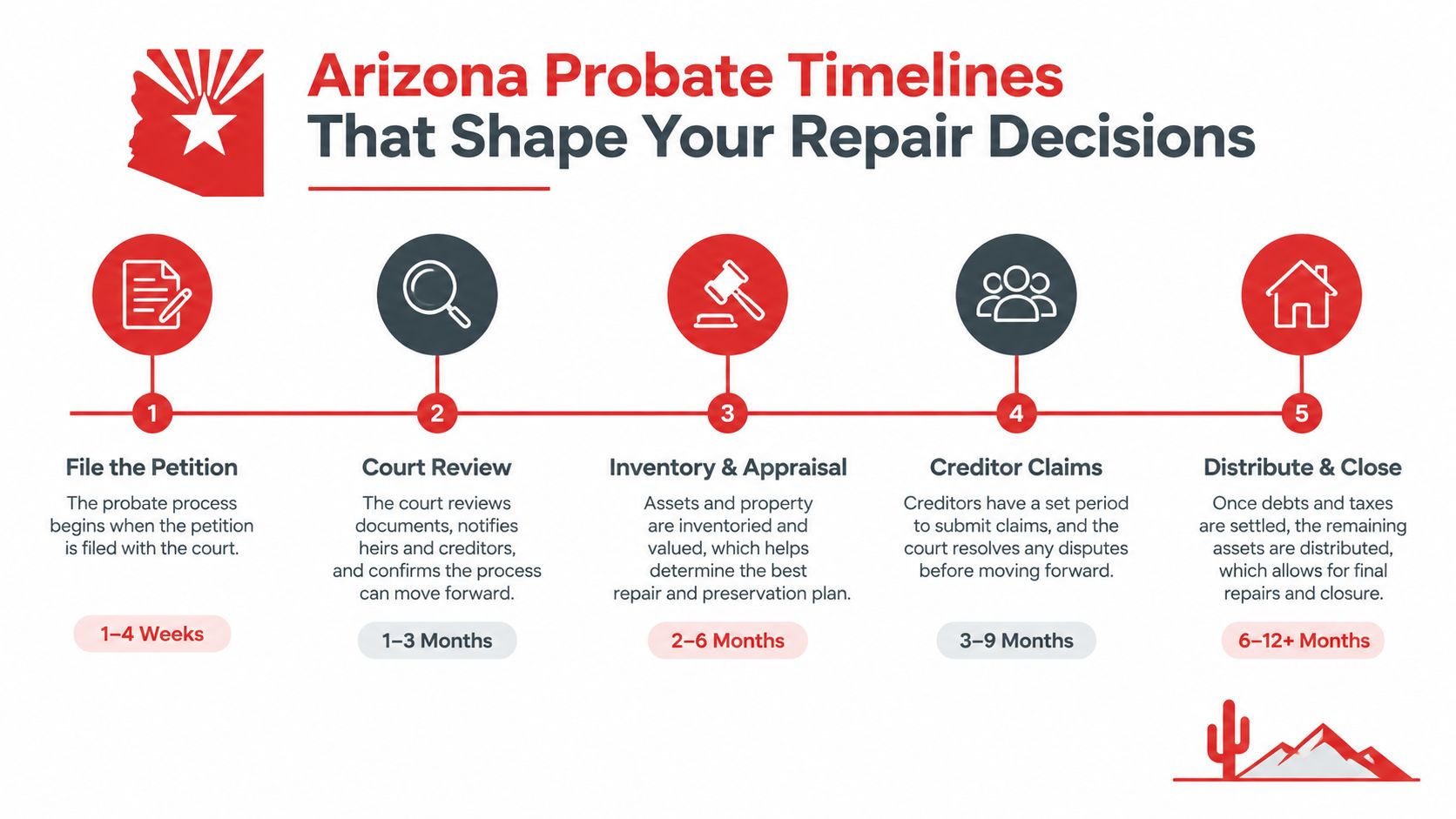
What the probate clock means for repairs
Use this sequence before approving work:
- Confirm the transfer path. Determine whether the home is held in a trust, jointly owned with survivorship rights, or part of a probate estate.
- Establish authority. The court appointment identifies the personal representative who can manage estate property and coordinate a sale.
- Inventory and value the home. Arizona probate procedure expects an inventory and appraisement within 90 days after appointment. Obtain an early condition report and valuation before committing estate funds.
- Protect the property during creditor administration. Address urgent conditions that could worsen damage, create liability, or threaten insurance coverage while claims remain open.
- Match the sale strategy to the remaining time. Compare the expected after-repair price with contractor costs, carrying expenses, commissions, financing, and the value of the delay. The higher listing price is not automatically the higher net.
A roof patch early in the process may prevent expanding water damage. A full kitchen remodel can be the wrong choice if title questions, beneficiary disagreements, or probate delays could leave the property sitting unfinished. Get written bids and a current as-is valuation before choosing between repair and sale.
Small-estate rules need careful attention
Arizona’s small-estate affidavit rules changed effective September 26, 2025. Personal property may qualify up to $200,000, with that affidavit available 30 days after death. Real property may qualify up to $300,000 in equity, but its affidavit is unavailable until at least six months after death and must be filed with the court rather than merely presented to a third party, according to this Arizona probate rules reference.
The six-month real-property rule can leave families managing security, insurance, utilities, and temporary repairs during the waiting period. Heirs weighing that route can read this Arizona probate timeline guide. Agents handling a probate listing can also review this probate listing guide for agents, while an Arizona probate attorney should confirm the estate’s authority and filing requirements.
What a Personal Representative Can Fix Before Selling
A properly appointed Arizona personal representative generally has broad authority over estate real property and may sell it without separate court approval in many situations, subject to estate debts and beneficiary interests, as described in this explanation of personal representative powers under Arizona law. That authority doesn’t mean every renovation is automatically appropriate.
The important distinction is between preservation work and discretionary remodeling. Preservation protects the estate’s existing value or makes the property safe. Remodeling changes the property based on a judgment about what might produce a better sale.
Preservation work usually comes first
Common preservation items include:
- Roof leak repairs: Stop active water intrusion and document the affected areas.
- Plumbing service: Repair leaks, failed water heaters, or broken supply lines.
- HVAC work: Restore essential cooling where possible, especially in vacant desert homes.
- Pest treatment: Address active infestations that could worsen structural damage.
- Pool and yard maintenance: Prevent unsafe conditions, equipment damage, or neighborhood complaints.
- Property security: Board or replace broken windows, secure doors, and maintain exterior lighting.
The representative should confirm authority from the court appointment, photograph the condition, obtain written scopes, and request two or three bids before approving significant work. The bids should identify materials, labor, exclusions, payment terms, and expected completion dates.
Remodeling creates a different level of risk
A new kitchen, room addition, extensive landscaping overhaul, or full cosmetic renovation may benefit the eventual buyer, but it can also create beneficiary disputes. The representative should evaluate whether the spending is justified by a valuation, a broker’s market analysis, written contractor estimates, and the likely sale timeline.
| Repair Category | Typical Cost Range | Authority Needed | Risk if Unauthorized |
|---|---|---|---|
| Emergency leak or broken window | Varies by condition | Confirm estate authority and document urgency | Further damage or questions about spending |
| HVAC service or essential repair | Varies by system | Personal representative authorization, with records | Property deterioration and beneficiary objections |
| Pest treatment or pool safety work | Varies by scope | Preservation-based approval and documentation | Safety exposure or increased repair costs |
| Cosmetic remodeling | Varies widely | Beneficiary notice or court guidance may be appropriate | Dispute over wasteful estate spending |
| Major renovation or addition | Varies widely | Legal review before commitment | Potential challenge to the representative’s decisions |
A representative should never assume that an attractive upgrade is automatically a responsible estate expense. Before approving work, the estate should preserve invoices, receipts, contracts, permits, and lien waivers, and the representative should ask counsel how Arizona probate duties apply to the specific estate.
For a closer discussion of renovation authority and timing, heirs can review whether a house can be renovated during probate in Arizona.
Your Three Main Options for Selling the Property
A Phoenix block home with original plumbing may need only targeted work if its structure is sound and the estate can pay contractors. A vacant Tucson property with roof damage faces a different problem, because financing and inspections may narrow the buyer pool. A Prescott cabin without dependable HVAC can attract interest, yet system concerns may delay closing. The repair decision must match the estate’s authority, cash position, and timeline.
Arizona heirs generally have three sale paths. Each exchanges price, speed, control, cash exposure, and certainty differently.
| Option | Typical Repair Spend | Days to Close | Net to Estate | Best For |
|---|---|---|---|---|
| Repair and list with an agent | Condition-dependent | Depends on repairs, marketing, and buyer financing | Potentially higher gross price, reduced by selling costs and repairs | Local heirs with cash, time, and a manageable project |
| List as-is on the open market | Limited safety and cleaning work may still help | Depends on buyer demand and financing | Lower price may be offset by avoiding major repairs | Homes with moderate defects and heirs willing to manage showings |
| Sell directly to a cash buyer | Often no seller-funded repairs | Scheduled around authority and title clearance | Usually below a fully repaired retail result, with fewer sale-related burdens | Out-of-state heirs, major defects, vacancy, or tight estate timelines |
Repair and list traditionally
A traditional listing reaches the broadest buyer pool and may bring a stronger gross offer when the property is clean, functional, and financeable. The estate must fund and coordinate contractors, handle inspections and appraisal, accommodate showings, and prepare for negotiations. Buyers may still request credits after repairs are finished.
The right comparison is net proceeds, not the highest projected sale price. Arizona selling costs commonly total about 7% to 9% of the final sale price when commissions, closing costs, repairs, and staging are included, according to this Arizona home-selling cost analysis. Subtract that range, the repair budget, carrying costs, and delay from the expected price before authorizing work.
List as-is on the open market
An as-is listing limits seller-funded improvements, but it does not remove buyer scrutiny. Inspections can expose roof, plumbing, electrical, or HVAC problems. Financing conditions may shrink the buyer pool, and visible defects can produce price reductions or repair-credit requests.
This option fits a property with manageable defects and an estate that can manage showings, disclosures, and an uncertain closing schedule. Price the home from the beginning. An inflated list price creates longer market time and weaker offers.
Sell directly
A direct sale removes the renovation project and reduces coordination among contractors, inspectors, appraisers, and buyers. Red Rock Properties purchases Arizona residential properties as-is and may offer flexible closing timing when that arrangement fits the estate’s authority and title status.
The tradeoff is straightforward. The offer reflects repair, holding, resale, and transaction risks, so it will generally fall below the price of a fully repaired retail listing. Compare the offer with the retail path after deducting repairs, selling costs, insurance, utilities, taxes, and the value of the time required to finish probate. For a practical explanation of the Arizona as-is home-selling process, review the steps before choosing this route.
Before accepting any option, confirm that the personal representative has authority to sign and that title can be conveyed. A fast offer cannot cure missing probate authority or unresolved estate ownership.
How to Prepare an Inherited Home for Market Without Overspending
An inherited home rarely needs a full remodel before buyers can judge it. It needs to be safe, accessible, documented, and priced. Start by protecting the property and correcting defects that could stop financing, cause further damage, or create liability.
A practical preparation order
- Document the condition. Photograph defects and create a written inventory of fixtures, appliances, personal property, and visible damage.
- Address urgent preservation issues. Stop leaks, secure openings, prevent standing water, and keep major systems operating.
- Obtain written opinions. Collect contractor bids, an inspection, and property valuations. Use them to separate required work from optional upgrades.
- Improve presentation selectively. Remove trash, clear walkways, trim overgrowth, clean the interior, and improve lighting when the cost is modest.
- Prepare a disclosure file. Gather repair records, permits, invoices, warranties, utility history, and known defect information.
- Keep probate accounting complete. Save receipts, canceled checks, contracts, lien waivers, and communications supporting each expense.
Active roof leaks, exposed wiring, plumbing failures, broken windows, unsafe stairs, severe water intrusion, and failed cooling or other major systems deserve attention before paint colors or countertop finishes. Phoenix, Mesa, and Scottsdale buyers may respond well to a clean interior, working cooling, an orderly yard, and clear information about the roof and plumbing.
A full design overhaul often fails to recover its cost, especially when nearby homes do not support a higher price ceiling.
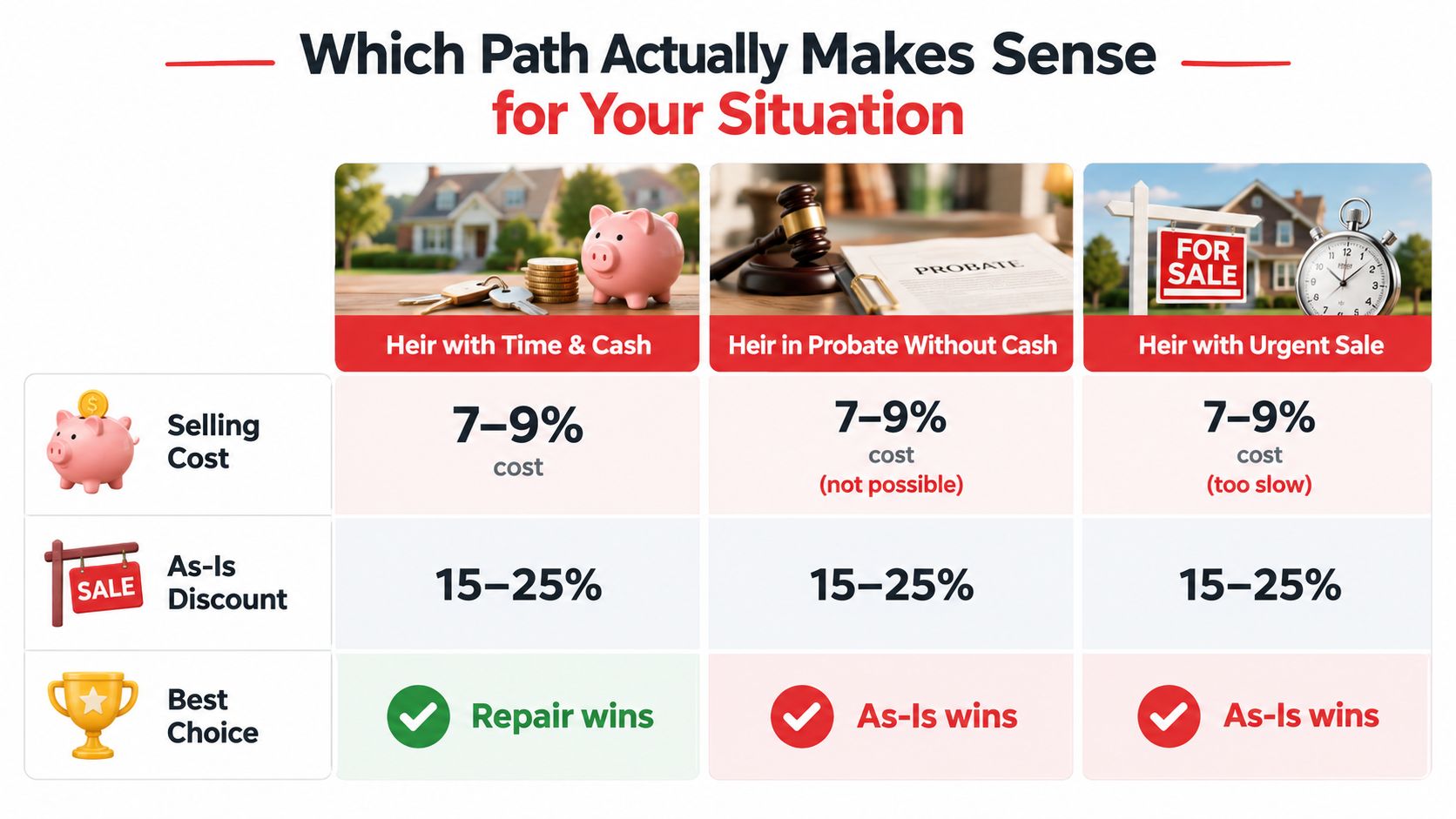
Use the after-repair value as a ceiling
Estimate the likely value after repairs, then subtract the work, selling costs, carrying expenses, and a contingency for surprises. If the resulting net proceeds barely improve on an as-is offer, renovation adds risk without a strong financial reason. For a full breakdown, review this repair-versus-as-is cost comparison.
An as-is sale may bring a lower price than a fully repaired listing, but that gap is not the estate’s profit. Repairs, selling expenses, utilities, insurance, taxes, delays, and inspection negotiations reduce the amount the heirs keep. The personal representative should compare complete net statements for both paths before authorizing work.
Use written bids and a realistic schedule. A contractor estimate that excludes permits, hidden damage, or vacant-home carrying costs can make a repair plan look profitable when it is not.
The strongest preparation plan is targeted, documented, and tied to the estate’s authority and timeline. A higher list price does not help if the family must fund a major project and wait longer for proceeds.
Which Path Makes Sense for Your Situation
The right choice is not the highest possible asking price. For an inherited home, judge each option by the strongest net result after repairs, selling costs, carrying expenses, delay, and stress. Use the comparison framework established earlier, with the same assumptions for property value, condition, mortgage balance, liens, repair budget, and expected closing costs.
Three decision scenarios
A local heir with time and cash may choose targeted repairs followed by a traditional listing. This works when the roof and major systems are repairable, the estate can pay contractors without hardship, and the personal representative has authority to supervise the work. Skip the luxury remodel. Aim for a clean, safe, financeable home that presents well.
An out-of-state heir managing a vacant Phoenix property may favor a direct as-is sale. Distance creates coordination problems, while vacancy increases the need for security, utilities, inspections, and regular oversight. A failing roof, dead cooling system, or extensive contents can make project management costly even before contractor invoices arrive.
A personal representative facing creditor pressure or a fixed probate schedule should prioritize certainty. Limited repairs may protect the estate, but a major renovation can tie up funds and create disputes before creditors, beneficiaries, and title professionals are satisfied. Confirm the representative’s authority before committing estate money or signing repair contracts.
Probate timing can change the answer. If the estate may rely on Arizona’s six-month real-property affidavit rule, waiting for that route can make an extended renovation less practical. A repair plan should fit the authority available now, the expected sale timeline, and the date when proceeds can be distributed.
The useful comparison is expected net proceeds versus the cost of delay and uncertainty.
A direct sale fits when heirs lack repair cash, live far away, disagree about improvements, or need a predictable closing plan after authority is established. A traditional sale fits when the property is close to market-ready and the estate can absorb the work without delaying probate or creating financial strain.
Record the decision in writing. Give beneficiaries a short comparison showing the expected retail price, repair budget, selling costs, carrying obligations, estimated timeline, and as-is offer. The personal representative can then explain why the selected path serves the estate, rather than defending the highest list price.
Practical Next Steps and Frequently Asked Questions
If a family is ready to sell an inherited Arizona house, the first appointment should be with the personal representative, title company, and probate counsel, not a contractor. Confirm how title is held, review the will or trust, and establish who can authorize repairs, sign contracts, accept an offer, and convey the property. A tax professional should address estate-specific tax questions before the sale terms are finalized.
Small-estate procedures may simplify administration in some cases, but real property follows its own timing. As covered in the probate timeline section above, the real-property affidavit is unavailable until at least six months after death and must be filed with the court. That waiting period can affect whether a renovation makes financial sense. Spending estate funds on a project that finishes after the property could otherwise sell may reduce the estate’s practical return.
Questions Arizona heirs ask most often
Can an inherited house be sold before probate closes?
A sale may proceed after the personal representative has authority, and some transactions may require court approval. An heir should not sign a deed or promise clear title until probate counsel and the title company confirm the estate’s authority. The closing plan must match the actual probate status, not the family’s assumption about who owns the house.
Does the house have to be fully repaired?
No. Address hazards and prevent further damage first. An as-is sale can work, but it does not eliminate disclosure duties. Known material defects may include structural problems, roof damage, plumbing or electrical issues, water damage, mold, and unpermitted work. Arizona disclosure guidance also commonly covers heating and cooling, wood infestation, water-system issues, major repairs, environmental conditions, and lead-based paint information for homes built before 1978, as summarized in this Arizona as-is disclosure guide.
Who pays for repairs and maintenance?
After appointment, the personal representative generally authorizes reasonable preservation work using available estate funds. Before appointment, heirs should avoid discretionary repair contracts and ask probate counsel how urgent costs can be approved, paid, and documented. Keep receipts, contracts, invoices, and lien waivers with the estate records.
How do taxes affect the sale?
Inherited property may receive a stepped-up basis, but the result depends on the estate, valuation, ownership, improvements, and sale timing. A CPA or tax attorney should calculate the basis and likely tax treatment instead of relying on a general assumption.
What documents will the buyer and title company need?
Prepare the death certificate, probate appointment or court filings, recorded ownership documents, mortgage details, lien releases, repair records, disclosures, and beneficiary or court documentation when applicable. Order the title search early. Unresolved liens, unpaid property taxes, or HOA balances can delay closing after a buyer is already committed.
A sequence that keeps the sale moving
- Confirm authority through probate, trust administration, survivorship, or an applicable affidavit procedure.
- Order a title search and identify mortgages, liens, HOA balances, and property-tax issues.
- Document condition with photographs, records, and an inspection when appropriate.
- Obtain two valuations, one for a repaired retail scenario and one for an as-is sale.
- Get written repair bids for urgent work and preserve every receipt and lien waiver.
- Choose the sale path by comparing net proceeds, timeline, cash exposure, and family agreement.
- Coordinate with escrow and counsel until the deed, debts, disclosures, and proceeds are properly handled.
A local Arizona direct buyer such as Red Rock Properties may suit an estate that needs an as-is solution, has heirs living out of state, or owns a property too damaged for a practical listing. Compare any written offer with a repaired-listing estimate after subtracting contractor costs, commissions, holding expenses, financing, insurance, utilities, and the cost of waiting for authority or completion. Ask an attorney or tax professional to review the transaction when the estate is complex.
Red Rock Properties offers direct purchases of Arizona homes in as-is condition, with flexible closing dates and coordination with title and escrow for inherited or probate properties that need repairs. Families can review their options and request more information through Red Rock Properties without committing to a sale.